
Vet approved dog food recipes offer a more responsible starting point for home-prepared meals. They move the process beyond attractive ingredients and casual online advice. Dogs need meals designed for their actual nutritional requirements. Those requirements can be difficult to estimate without training. A veterinarian can help determine whether home cooking suits your dog. Qualified nutrition support can help shape a recipe that meets specific needs. This does not remove the joy from preparing food. It simply gives that care a stronger foundation. Clear planning can make every bowl more consistent. Home cooking works best when thoughtful decisions replace guesswork.
Dogs are not interchangeable when it comes to nutrition. Their needs can differ because of age, body condition, activity, and medical history. A healthy adult dog may need something very different from a growing puppy. Ask your veterinarian about the right starting point before committing to a routine. A fresh dog food routine should reflect real life, not a generic ideal. Bring details about current food, treats, supplements, and feeding schedule. Keep your dog’s health records available for discussion. Individual context helps prevent well-meaning mistakes. It also makes recommendations easier to follow. Better information leads to more useful recipes.
Protein is important, but it is not the whole nutritional picture. Minerals, fatty acids, vitamins, and energy all need attention. Too much or too little of one component can create problems over time. This is why protein and mineral balance matters in every formula. Follow written recipe instructions closely. Use the recommended supplement rather than replacing it casually. Do not assume more meat always makes a meal better. Nutritional balance depends on the relationship between ingredients. Accurate recipes make that relationship easier to preserve. Careful proportions support long-term feeding confidence.
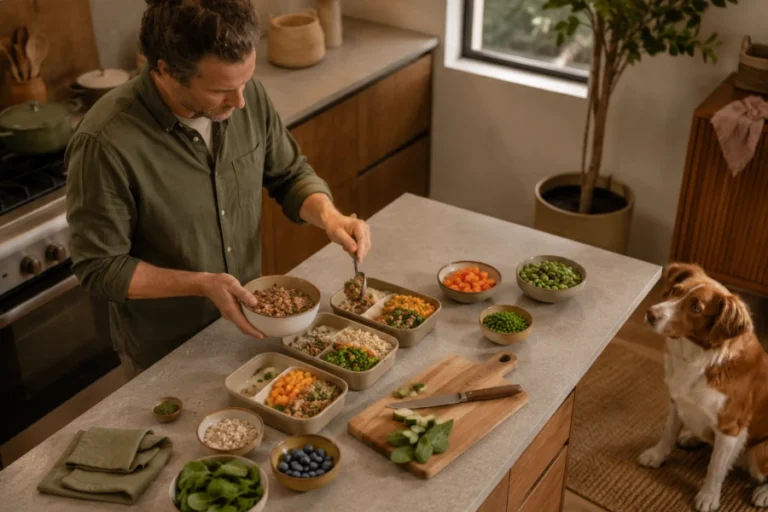
Cooking in batches can simplify a careful feeding routine. It helps you prepare ingredients when you have time and focus. Portioning meals in advance can reduce rushed decisions later. Use labeled containers to keep serving sizes clear. A dependable dog meal batch cooking system can also improve food safety. Cool meals properly before refrigerating or freezing them. Keep prep surfaces clean and separate raw items from cooked food. Record recipe dates and storage instructions. Small systems make homemade feeding easier to sustain. Organization supports quality as much as cooking skill does.
Ingredient substitutions can change a recipe more than expected. Different proteins vary in fat, moisture, and nutrient content. Swapping a vegetable or grain can also affect the formula. Check with the professional who created the recipe before altering it. Use the exact supplement and preparation method when possible. Keep measurements consistent from batch to batch. Avoid turning a carefully formulated recipe into a flexible template. Precision protects the balance built into the meal. Reliable execution matters every day. Following instructions carefully is part of feeding responsibly.
Even a well-formulated recipe needs the right serving amount. Monitor your dog’s body condition and activity changes. Ask your veterinarian how often to reassess portions. Use treats as part of the overall daily intake. A high-treat day may call for a small adjustment elsewhere. Avoid changing meals dramatically because of one hungry-looking afternoon. Consistent observation gives you a more accurate picture. Keep a simple weight and feeding record. Small changes are easier to evaluate than sudden ones. Portions should support health, not guesswork.
Home-prepared meals do not need to create pressure every single day. Build a custom dog feeding plan that accounts for travel, busy weeks, and changing needs. Keep approved backup options available when cooking is not possible. Review the plan after major health or lifestyle changes. Bring recipes to regular veterinary appointments. Ask questions before adding new supplements or specialty ingredients. Treat every adjustment as a small experiment with clear notes. A practical system encourages better consistency. Consistency makes it easier to protect nutritional quality. Your dog benefits from care that is both loving and well-organized.



Leave a comment