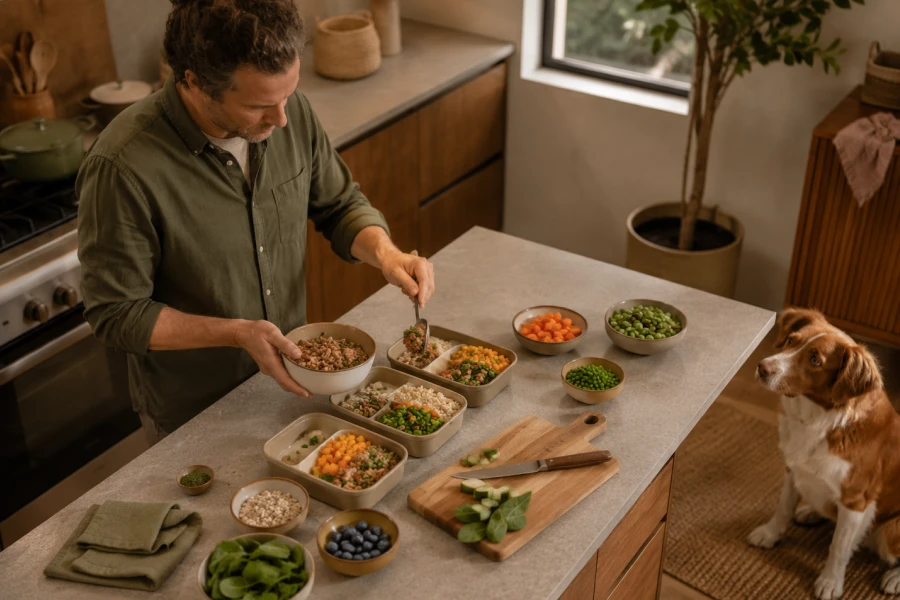
Homemade dog food nutrition is not only about what looks good in the bowl. It is about whether every daily meal supports your dog over time. Fresh meats, grains, and vegetables can be useful building blocks. However, dogs require specific nutrients in specific relationships. Those details are easy to miss when recipes rely on intuition alone. A beautiful meal can still be incomplete. Responsible preparation means looking beyond individual ingredients. It means considering portions, supplements, storage, and your dog’s changing needs. The more consistent the process becomes, the easier it is to assess. Good home feeding is both personal and carefully informed.
One meal rarely tells the full nutritional story. Dogs eat variations of the same pattern over weeks and months. That repetition makes small omissions more important. A clear homemade food portion planning method helps keep servings consistent. Use your dog’s target weight and lifestyle as practical reference points. Discuss calorie needs with a veterinarian when unsure. Avoid judging portions by appetite alone. Some dogs will happily overeat even when their needs are met. Regular review makes the routine easier to adjust. Long-term thinking protects against accidental drift.
Recipes work best when they can be repeated accurately. A pinch, scoop, or handful can vary widely from one day to another. Measuring ingredients creates a clearer picture of what your dog receives. It also makes professional feedback more useful. Use scales and standardized cups when practical. Keep recipe notes in one consistent place. Record any ingredient swaps before they become habits. A disciplined process supports nutrient-focused dog feeding without making meals feel clinical. Reliable measurements give you more confidence in each serving. Precision is a form of care, not unnecessary complication.
Age, breed, lifestyle, and health history influence nutritional needs. A young dog may need a different formula than a senior companion. Highly active dogs can have different energy demands than quiet indoor pets. Medical concerns may require more specific support. Share your dog’s full history before changing feeding routines. Bring current medications and supplements to nutrition conversations. Avoid copying an online meal plan without context. A recipe that suits another dog may not suit yours. Personal details make feeding decisions safer. Good planning starts with the dog in front of you.
Veterinary support is especially important when homemade meals become a long-term diet. Your primary veterinarian can help identify when additional expertise is needed. A veterinary nutrition professional can evaluate recipes for completeness. This kind of veterinary nutrition guidance is useful for both healthy dogs and medically complex cases. Ask questions about supplements, preparation methods, and ingredient substitutions. Keep the written recipe available at appointments. Do not make major changes based only on social media trends. Professional input helps turn enthusiasm into a safer system. Clear recommendations can also make shopping easier. Reliable advice protects the effort you put into cooking.
Nutrition also depends on how food is handled after cooking. Cool prepared meals promptly and store them safely. Divide batches into portions that are easy to thaw. Use clean containers and avoid leaving food out too long. Follow food-safety practices with raw proteins and kitchen surfaces. Label batches with dates so older meals are used first. Do not assume leftovers are safe simply because they still look normal. Consistent storage helps protect quality and reduce waste. Organized preparation makes busy days less stressful. Safe handling supports every nutritional choice you make.
A complicated routine can become difficult to maintain. Choose preparation days that fit your schedule realistically. Keep a simple backup plan for travel or unexpected changes. Reliable commercial options may sometimes be part of responsible feeding. Avoid all-or-nothing thinking when life becomes busy. A flexible routine helps you stay consistent overall. Consider whether cooking, storing, and serving can work every week. Build systems that reduce decision fatigue. Practicality supports better follow-through. The best plan is one you can repeat without rushing.
Watch your dog’s overall condition rather than chasing quick changes. Notice energy, digestion, appetite, skin, coat, and weight trends. Record meaningful observations before making adjustments. Discuss concerns with a veterinarian rather than changing multiple ingredients at once. Small records can reveal patterns that memory misses. Keep the feeding process calm and predictable. A well-run routine helps your dog feel secure around meals. It also gives you clearer information when questions arise. Consistent observations support sensible decisions. The most useful meal plan evolves carefully, not impulsively.



Leave a comment