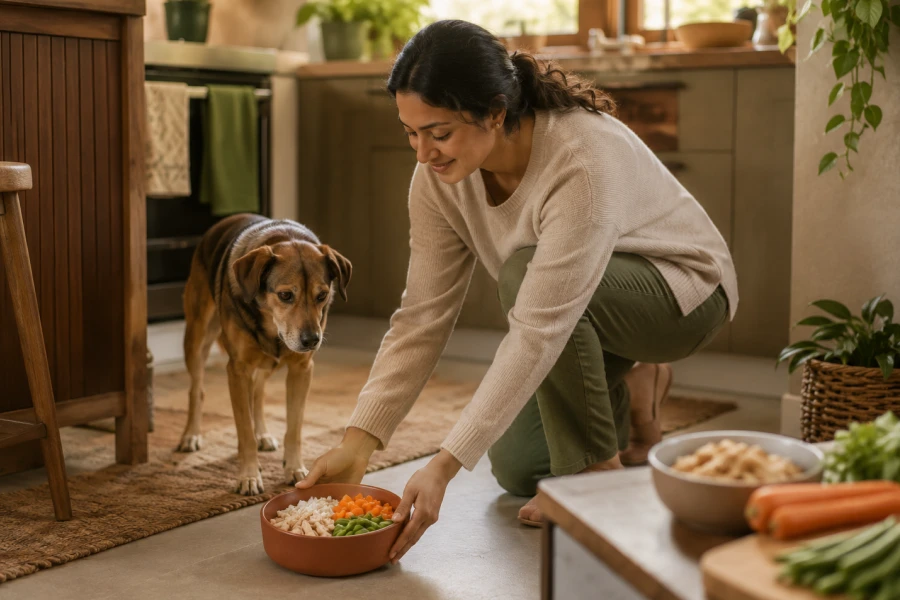
Balanced homemade dog food can feel deeply rewarding when it is approached with care. Preparing meals yourself creates more visibility into ingredients and routines. It also brings responsibility for nutritional completeness and consistency. Dogs need more than appealing proteins and colorful vegetables. Their meals must match life stage, health needs, activity level, and portion requirements. Thoughtful planning protects against gaps that may not be obvious immediately. A recipe that looks wholesome can still miss essential nutrients. This is why responsible home feeding starts with reliable information. The best approach combines fresh preparation with professional guidance. Careful structure turns a good intention into a safer daily practice.
Fresh ingredients can be helpful, but freshness alone does not create nutritional balance. Dogs need specific amounts of protein, fats, minerals, and vitamins. Those needs can shift with age, size, health history, and activity. A strong home-cooked dog meal planning process begins before shopping. Ask your veterinarian whether home preparation fits your dog’s situation. Dogs with medical conditions may need a more tailored approach. Avoid borrowing recipes from unrelated breeds or life stages. Small nutritional differences can matter over many meals. A thoughtful formula supports better consistency than improvisation. The most useful meals are built for your specific dog.
It is easy to underestimate the science behind a daily bowl. Many nutrients work together rather than independently. Adding more of one ingredient does not always fix another imbalance. Understanding canine nutrition basics helps you ask better questions before cooking. Look for advice from your veterinarian or a qualified veterinary nutrition professional. Use measured recipes rather than loose estimates. Weigh ingredients when precision matters. Keep notes about substitutions and portion changes. Consistency makes it easier to spot what helps your dog. Accurate information gives home preparation a safer foundation.
A well-chosen ingredient can still create problems in the wrong amount. Dogs need energy that matches their actual daily life. A growing puppy, senior dog, and active adult will not need identical servings. Track body condition rather than relying only on the scale. Notice appetite, stool quality, energy, and coat condition. Use measuring tools instead of visual guesses. Make one change at a time when adjusting portions. This keeps the cause of any reaction easier to identify. Consistent portions also reduce accidental overfeeding. Small measurements support long-term health more than dramatic meal changes.
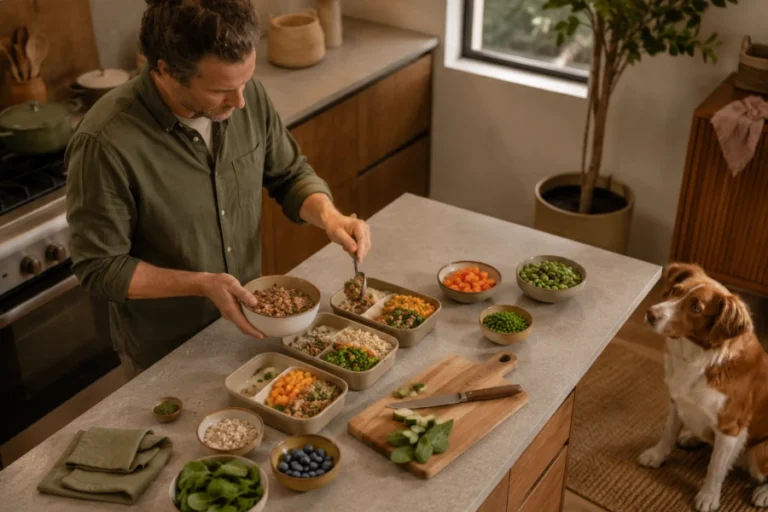
Home feeding becomes easier when you repeat dependable routines. Shop from a planned list rather than choosing ingredients at random. Prepare components in batches when your schedule allows. Use storage containers that keep portions organized and safe. Build meals around balanced dog meal formulas developed for your dog’s needs. Follow preparation instructions carefully, especially for supplements. Avoid doubling recipes unless you can preserve the intended proportions. Label meals with dates and serving notes. A reliable system reduces rushed substitutions. Routine gives homemade feeding practical staying power.
Many foods that seem harmless to people can be unsafe for dogs. Avoid guessing whether a pantry item belongs in the bowl. Learn which ingredients require caution or complete exclusion. Keep onions, garlic, grapes, raisins, chocolate, and xylitol-containing items away from food preparation areas. Be careful with rich leftovers and seasoned foods. A list of dog-safe ingredient choices can simplify grocery decisions. Wash produce and store raw ingredients appropriately. Use clean utensils and surfaces during preparation. Food safety protects your dog as much as nutrient planning does. Reliable habits prevent avoidable mistakes.
Your dog’s needs may change over time. Weight shifts, dental changes, activity changes, and health concerns all matter. Revisit the plan after major life transitions. Ask your veterinarian whether the current meal still fits. Do not assume a once-useful recipe remains ideal forever. Monitor how your dog feels, moves, and recovers from activity. Keep health appointments as part of the feeding routine. Bring your recipe details when discussing nutrition questions. Regular review makes home preparation more responsive. A flexible plan can remain both personal and responsible.
Homemade feeding should support your life rather than create daily stress. Choose a system you can follow even during busy weeks. Keep emergency options available when cooking plans change. Avoid guilt when a practical choice is necessary. What matters most is feeding your dog safely and consistently. Clear instructions remove much of the uncertainty. Thoughtful portions make it easier to spot meaningful changes. Professional guidance gives you a reliable reference point. Steady preparation can turn meals into a caring daily ritual. The simplest sustainable plan is often the strongest one.



Leave a comment